Training and advisory
Programmes built around the work a team already does
Mohannad Hesham trains executives and their teams to use AI in their day-to-day work, and advises organisations on adoption and governance. The material people practise on is their own.
- A foundational AI workshop for sector heads, Misr El Kheir Foundation, Cairo
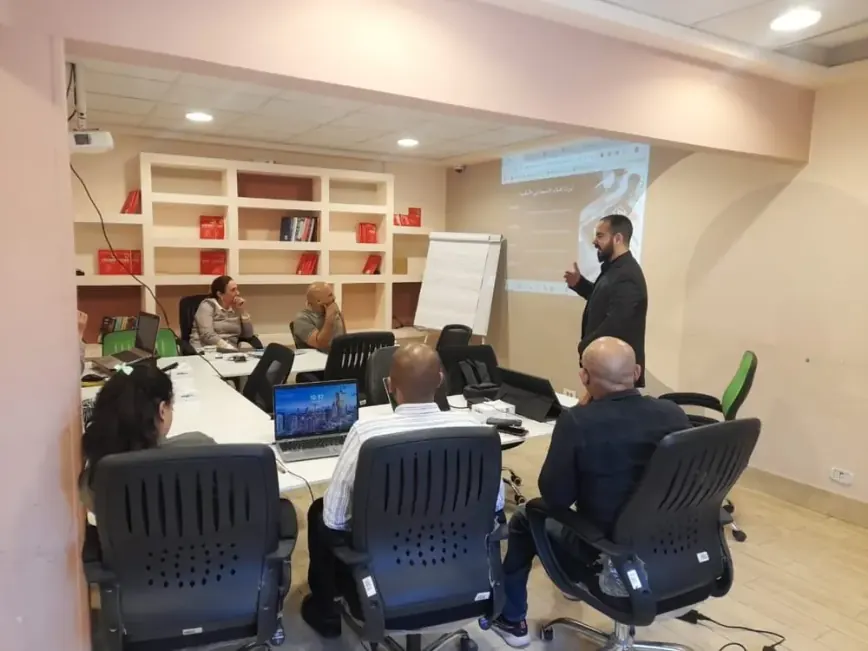
- Working a wall of sticky notes with the team at Halwani Brothers, Jeddah

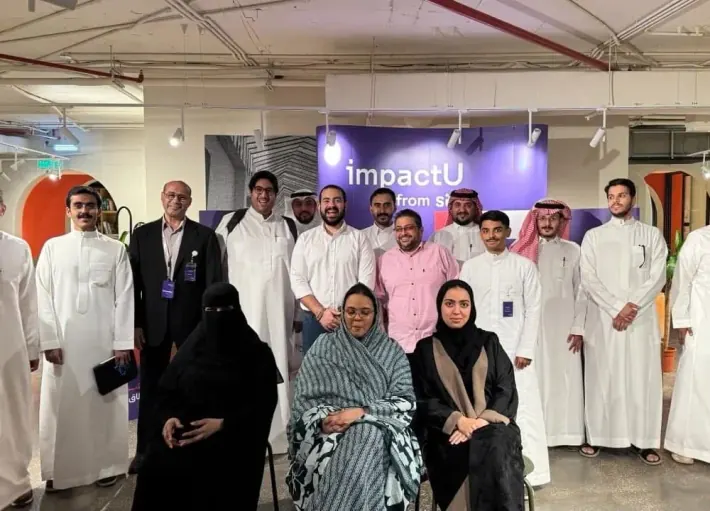
- Teaching at Impact U by stc, Riyadh

- Working through a theory of change with two founders, Riyadh

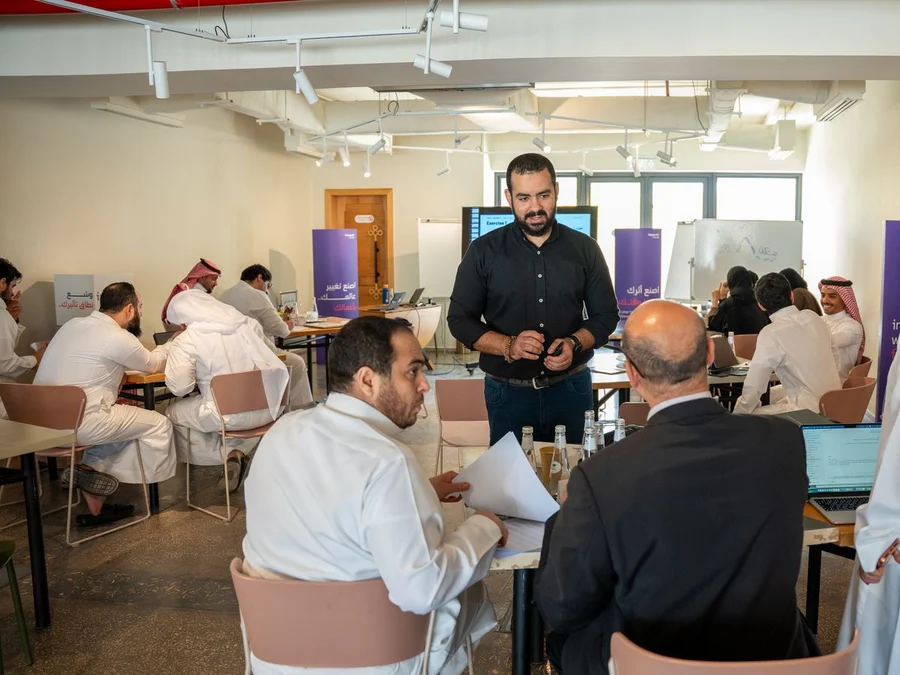
- Working the room between exercises, Impact U by stc, Riyadh
- A session with the technology team, Hassan Allam Properties, Cairo

Why AI programmes stall
Most stall for the same three reasons, and none of them are problems with the tool. His programmes begin with what an organisation is trying to achieve, and which part of that AI can help with. Every format below is built to address all three.
- 1
The process around the tool never changed
What his programmes doThey start by mapping how the team’s work flows today, then pick one recurring task that costs the team time and change the process around it.
- 2
The people using it were never prepared
What his programmes doPeople practise on their own tasks, in Arabic or English, and the team’s own trainers are prepared to carry it on after he leaves.
- 3
Nobody decided who checks what comes back
What his programmes doBefore a programme ends, the team agrees where AI is not used, what must be checked, and who checks it.
How he is usually brought in
- Organisations ready to adopt
The Anchor Sprint
A 30-day whole-organisation programme: mapping how the team's work actually flows, two days of applied training, two to four quick wins delivered inside the sprint, and a roadmap for what comes after.
- Companies, foundations, public bodies
Training a team
A programme built around the work your team already does, so what people practise on is their own. Anything from a single day to a cohort running over several weeks. In Arabic or English.
How it starts
Nothing is agreed until you have an outline you can take to a budget holder.
- 01
A conversation
Twenty minutes on who the group is and what is actually slowing them down. No preparation needed on your side.
- 02
A look at the real work
He looks at what your team does day to day, so the exercises use your own work rather than invented ones.
- 03
An outline you can circulate
What the sessions cover, what people will be able to do at the end, and how long it takes. Something you can put in front of a budget holder.
- 04
Dates
Usually a few weeks out for in-person work in the Gulf, sooner for online.
Selected programmes
Work is contracted through Mohandes AI, or with him directly as a consultant.
- Cairo · via Meska AI

Hassan Allam Properties
A day with the IT department on putting AI to work safely. Which of their own tasks it should touch and which it should not, and what can and cannot go into a tool that sits outside the company. Then prompt injection: how hidden instructions in a document or a web page can steer a model into doing something it was never asked to do, and what a team has to check because of it.
- Riyadh · via Ashoka Arab World
Impact U, by stc
Theory of change and impact measurement in the age of AI, for impact-driven founders and programme leads — the difference between delivering a solution and creating a change. Two days, in person.
- Cairo · via Meska AI
Wadi Group
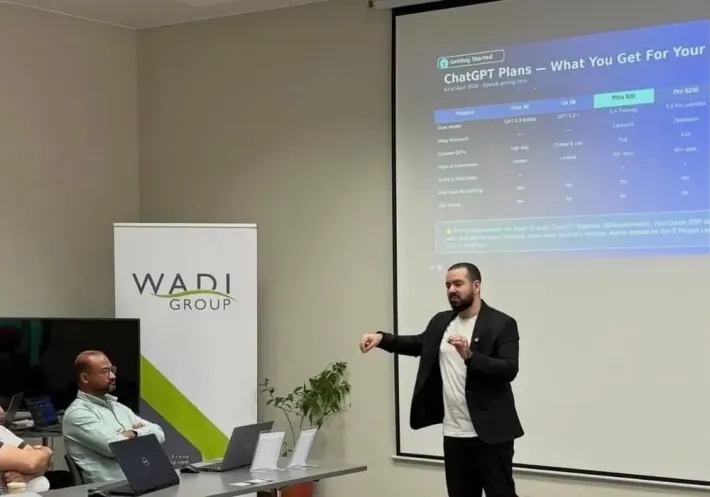
One day of a longer programme, on applied AI for commercial and operations teams across an agribusiness group working in food, poultry and packaging.
- Jeddah · via Mohandes AI
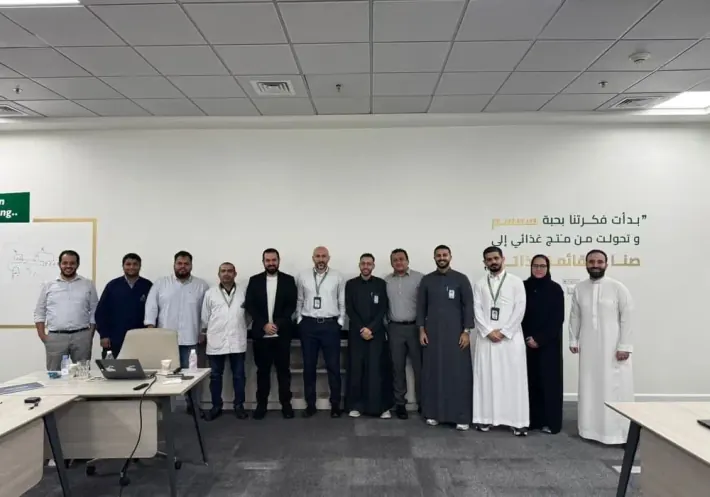
Halwani Brothers
Generative AI for supply chain, operations and engineering teams at one of the region’s largest food manufacturers.
- Jeddah · via Tick & Talk
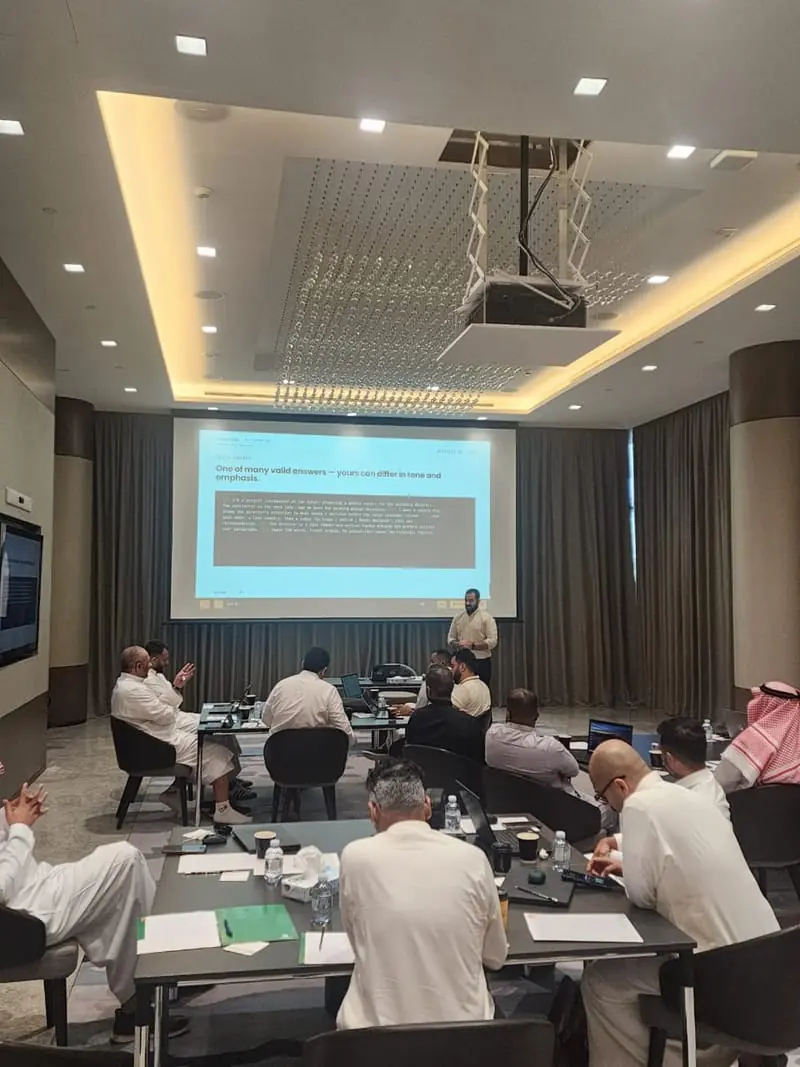
Dar Saleh
Applied AI literacy across eight functions of a philanthropic group and its affiliated charities: grants, endowments, health services, business development, finance, HR, projects and software.
- Egypt · Direct
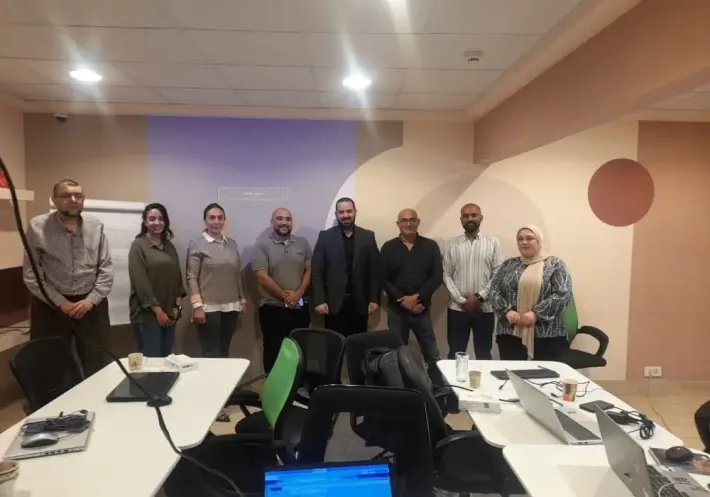
Misr El Kheir Foundation
AI fundamentals for programme and field teams at one of Egypt’s largest development foundations.
All engagements
Every engagement (15)Hassan Allam Properties · Gen-AI for Professionals · Ecosystem Day, water bootcamp · AI for Development working session …
- Hassan Allam Properties
- Gen-AI for Professionals
A recurring cohort programme for working professionals, taught with two colleagues.
- Ecosystem Day, water bootcamp
A session for founders and engineers entering the water sector, on how Life From Water chooses between household connections, network extensions, treatment stations, wells, riverbank filtration and solar, and why the local constraint decides it rather than the technology.
- AI for Development working session
Co-organised by Life From Water with J-PAL MENA at the American University in Cairo, for development organisations in Egypt already using AI or piloting a use case. Built around what is actually working and what is not, rather than a survey of tools. It included a presentation by Prof. Adam Osman, Scientific Director of J-PAL MENA and Associate Professor of Economics at the University of Illinois Urbana-Champaign.
- Impact U, by stc
- Innovation Factory
Two sessions for a cohort of Saudi startup founders. The first covered the social business model canvas: stakeholder and power mapping, revenue without mission drift, and theory of change. The second covered team and culture, from co-founder governance to turning a vision into execution.
- Strategic planning for water organisations
A capacity-building programme for six water and sanitation organisations in Ghana and Uganda, funded by the Conrad N. Hilton Foundation. Two group sessions, then one-to-one strategy work with each organisation and written feedback on every plan.
- Pitching to funders
The follow-on programme for the same six organisations. Two sessions on pitching, written feedback on each submission, a demo day, and a live pitch to the funder.
- North South Consultants Exchange
He led the company-wide AI transformation programme for their multinational team — eight sessions, from the foundations through to how to keep using it well once the training stops, what standards a team should agree together, and a plan for everyone's next thirty days.
- BasharSoft, which runs the WUZZUF job platform
A BasharSoft Academy session for the engineering and product team: the foundations of AI agents and where they genuinely fit into everyday work — not where they demonstrate well — and getting past the chat box into clearer instructions and something people can click through instead of another wall of text.
- Wadi Group
- Halwani Brothers
- Dar Saleh
- Misr El Kheir Foundation
- AI for Palestine
He co-developed the programme and led the teaching. Eighteen live sessions, a hundred participants, fifteen graduation projects.
Published courses
Each on the platform that hosts it. Together with live cohorts, 27,000+ learners.
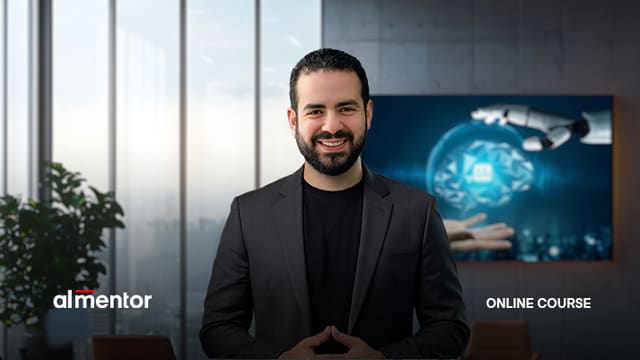
 AlmentorMust-Know Artificial Intelligence Concepts
 AlmentorAI for Professionals: From Basics to Real-world Applications
 UdemyAI Crash Course for Professionals
 Udemyما لا يسع الإنسان جهله عن الذكاء الاصطناعي

 Ta3limyAI Ethics
 Ta3limyAI for Customer Service
 Ta3limyAI in Sustainability
 Taalam AIPrompt Engineering
 Taalam AIAI Presentations
 eYouthMastering Perplexity for Research & Decision-Making
What learners said
Simple, direct content — no exaggeration. It respects the psychological fears around AI, helps you contain that anxiety, and changes how you think about AI tools entirely. Mohannad's style is unique: simplicity, clarity, and warmth throughout.
YaraI thought I knew how to use AI — until I finished this course and discovered I actually knew very little, and the journey is only just beginning.
Ahmed SaidWhat I loved is that it's neither shallow nor complicated — simple, direct, built on step-by-step practice. It made me feel like I was keeping up with AI, instead of just watching from the sidelines.
Mohamed ElBalahyEnvironmental & Water Engineer · USAID ScholarIf you feel lost and behind on AI, this course cuts through everything. It helped me stop feeling guilty about falling behind, and start using AI practically in real work and daily life.
Sohayb BasetBusiness Development Leader · MBA, Strategic ManagementI strongly recommend this for any founder. Simple and clear — it covers all the basics and more. AI will make a real difference for your project and your team.
Amira YousryEntrepreneurship · Incubators · InnovationIt explains AI through diagrams, images, and step-by-step videos — helping you solve daily problems and keep up with developments without any overwhelm.
Mohammad AlQara'wiFacilities Management Professional
The method he teaches from
The Anchor Method, published in full by Impact Anchor. Four stages, with six workshop steps whose initials spell ANCHOR.
Surface
The noise: a new tool every week, scattered experiments, and pressure to keep up.
- AAssess the landscapeThere is more AI news in a week than anyone can act on, so the first skill is triage. What to go deep on, what to note and move past, what to ignore, and what to hand to someone else. Most overwhelm is a filtering problem rather than a capability one.
Descend
Steady before motion. Adoption is treated first as a question of confidence and judgment, then of craft, and only then of tools.
- CConfidence and capacity firstWhether people have the confidence and the spare attention to try something new at all.
Anchor
One test a team puts to everything: will this increase the impact we are here for?
- NNarrow to one use caseOne recurring task that genuinely costs the team time or grief. Starting where the impact is, rather than where the technology is most interesting, is what separates a programme that sticks from a pilot that quietly stops.
Rise
Come back up and work anchored: the right depth for each use case, limits named up front, and a rhythm the team can keep.
- HHuman judgment and limitsName the places AI does not go before anyone asks. Decide what must be verified and by whom. Trust the tool, check the output, and keep a person accountable for everything it touches, because someone will eventually have to answer for it.
- OOperationaliseMove deliberately from occasional use, to reliable use, to built-in. Different modes suit different work.
- RRoadmap, resilience and spreadGrow the people who will carry it after you leave. Move from one person coping, to a team that works this way, to an organisation that would survive losing any one of them.
Send an enquiry
Choose a subject and the email opens with a few questions that help him reply usefully. Formal proposals and concept notes are welcome as attachments. He usually replies within two or three days.
Organisation:

Who would take part, and roughly how many:

What they do day to day:

Preferred timing, and location or online:

Language: Arabic, English, or both: